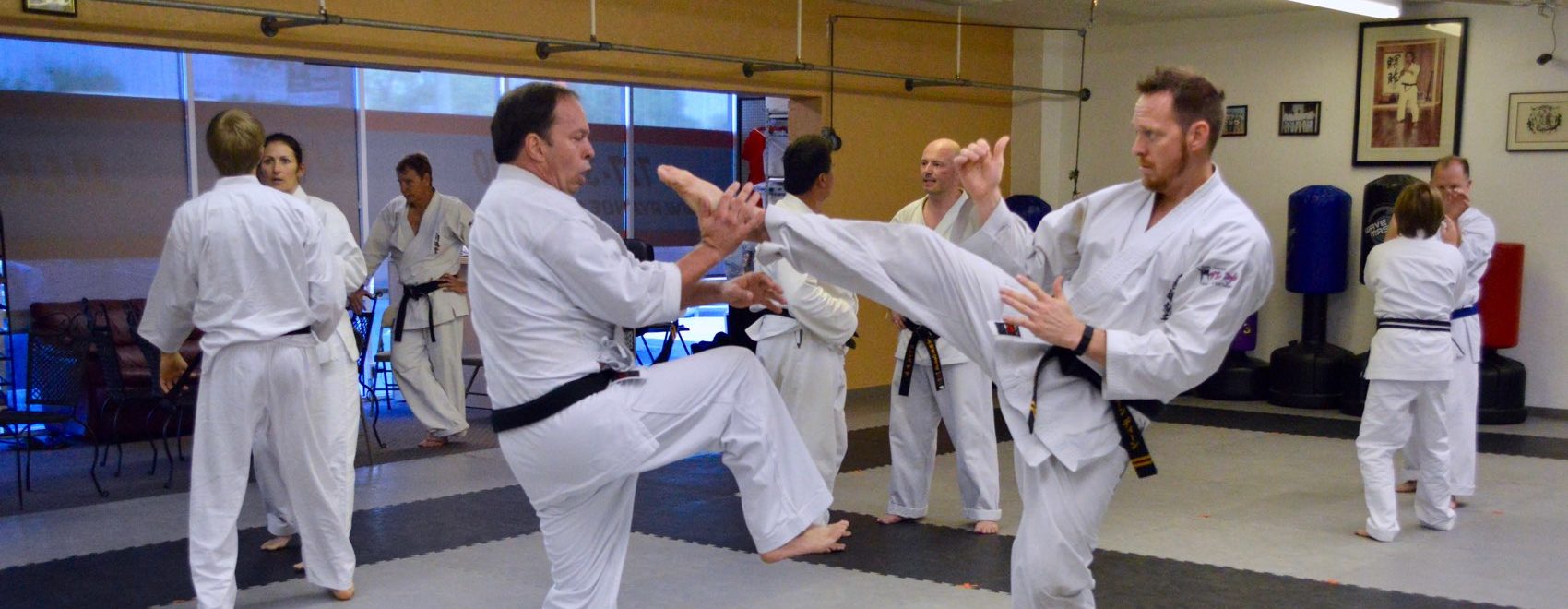
At The Dojo we teach traditional Okinawan style Uechi-Ryu karate (pronounced “way-chee-roo”). The Uechi-Ryu style is known for simple, explosive, and powerful techniques. Our emphasis is on techniques that are “low risk”, non-flashy, and highly effective in self defense situations.
Uechi-Ryu Karate Classes
While some martial arts are focused on the sporting aspects of competing in tournaments, Uechi-Ryu is a fighting system with emphasis on self defense. Our karate classes emphasize practical techniques that “win the fight”. Flamboyant, complicated techniques don’t work well in a street fight, so you won’t find them in Uechi-Ryu karate.
In Uechi-Ryu you will find circular blocks, grabs, open hand strikes, one knuckle punches, and debilitating low kicks. In our karate classes, the focus is on close-quarter combat. Techniques for striking vulnerable areas and stand up grappling techniques prepare the student for real life self defense situations.
Uechi-Ryu footwork is based on short, grounded stances that are are stable while allowing for quick movement in any direction.
While we spend substantial time with stretching drills during class, Uechi-Ryu Karate does not require extraordinary flexibility and can be practiced by any age group.
In our karate classes, you’ll engage in a variety of exercises that strengthen and harden the body. Body conditioning serves two purposes:
- Strikes become very focused, powerful, and penetrating.
- Body conditioning leads to an ability to deflect or even absorb incoming attacks.
Benefits of of Karate Classes
Our Uechi-Ryu karate classes involve a high degree of physical conditioning, but they are also really fun! We support and challenge each other to grow and improve.
Unlike other martial art styles, Okinawan karate does not put a lot of stress on the joints. As a result, you can continue your karate training well into the later years. There are many examples of Uechi-Ryu karate “supermen” who continue to train into their 60’s and 70’s with physiques that even younger athletes can admire.
To join us for Uechi-Ryu Karate training does not require exceptional strength or athletic ability. Students from all walks of life and differing physical capabilities enjoy the benefits of our karate classes conveniently located at The Dojo in Largo, Florida.
- Self Defense Skills
- Superior Physical Fitness
- Increased Flexibility
- Improved Balance and Coordination
- Intense Concentration and Focus
- Spiritual Development – Traditional Karate is a “Way of Life”
Come find out why karate has been around for hundreds of years and continues to gain in popularity. Uechi-Ryu karate is an art, a self defense system, a high intensity workout, a social experience, and a spiritual practice all rolled into one.
Uechi Ryu Karate Sanchin Kata
A kata (translated from Japanese to mean “form”) is a series of prearranged movements practicing the stances, posture, and techniques of a karate fighting system.
In Uechi-Ryu karate, the kata “Sanchin“ is the foundation for all that follows in your lifetime of training. It is the most important of the eight Uechi-Ryu kata studied today. As everyone knows, a structure without a good foundation will weaken and fall apart within a very short time. Sanchin, practiced as a dynamic tension kata, builds, strengthens, and hardens all muscles of the body.
Uechi-Ryu students focus on the following five elements to achieve the most from their Sanchin training:
- Building a strong physique: Make your body as hard as you can.
- Consolidate the basic stance: So as to give yourself the most leverage.
- Master proper breathing: Know when and when not to breath.
- Penetrating eye: Acute keen insight and development of peripheral vision.
- Develop spiritual concentration: Think only of what you are doing at that moment.
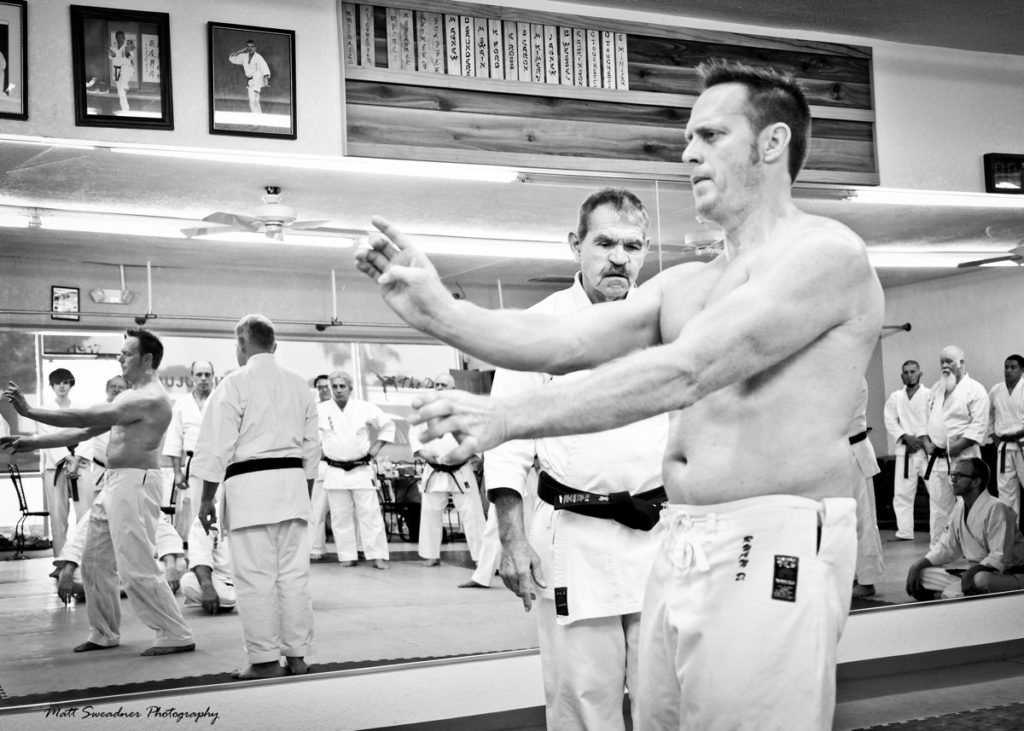
Although Sanchin is the first kata learned in our Uechi-Ryu karate classes, as one progresses to become a black belt, he or she still finds themselves working on perfecting the movements. Periodically, a student is tested physically in Sanchin. During this testing the instructor will strike key areas of the body checking the students balance and ability to focus certain muscle groups as a protective armor.
Rave Reviews for Karate Classes
I’ve been training at The Dojo for EIGHT years now. It’s more fun to keep in shape by going to Karate classes than going to a gym, plus I’m managing stress and learning self defense.
Debra Stanton
I’ve trained at several martial arts schools since I began studying karate as a teenager. Sensei Ryan Dean is a passionate instructor who “walks the walk,” setting the bar as a role model for what you can achieve with martial arts training.
Erick Känd
Professional Hypnotist
When I started with Master Dean I was in the autumn of my years, not athletically inclined, and I perceived myself as a challenge to any Sensei. His gift of teaching and patience enabled him to make me the best student way beyond whatever I perceived my abilities to be.
Steve Kleiman
Everyone treats you like you’re family and goes out of their way to help, encourage, guide, and support you…At “The Dojo” you are not a number, you are part of something very special and I am very grateful to be part of it.
Rick Davis
Student Manual for Uechi Ryu Karate Classes
“Right Click” link to Download:
Jiteki-Jyuku Student Manual
One shall pursue true passage of his or her own doctrine. One’s sorrow and joy should not be affected by the condemnation or praise by others. Self-reliance (belief) is the true nature of true being.
The Dojo is a member of the North American Jiteki-Jyuku Karate Associaton.
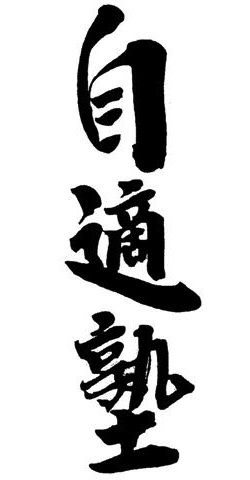
“Jiteki Jyuku” translated means “Self-Reliance” School.